Qorke
A complementary Sidama site that will contribute to our understanding of local floral diversity and seasonal bee forage.
Qorke forms the third component of our Sidama portfolio. Its inclusion gives the project an opportunity to compare different Sidama environments and understand how local vegetation, altitude, agriculture and seasonality influence bee forage.
Site profile
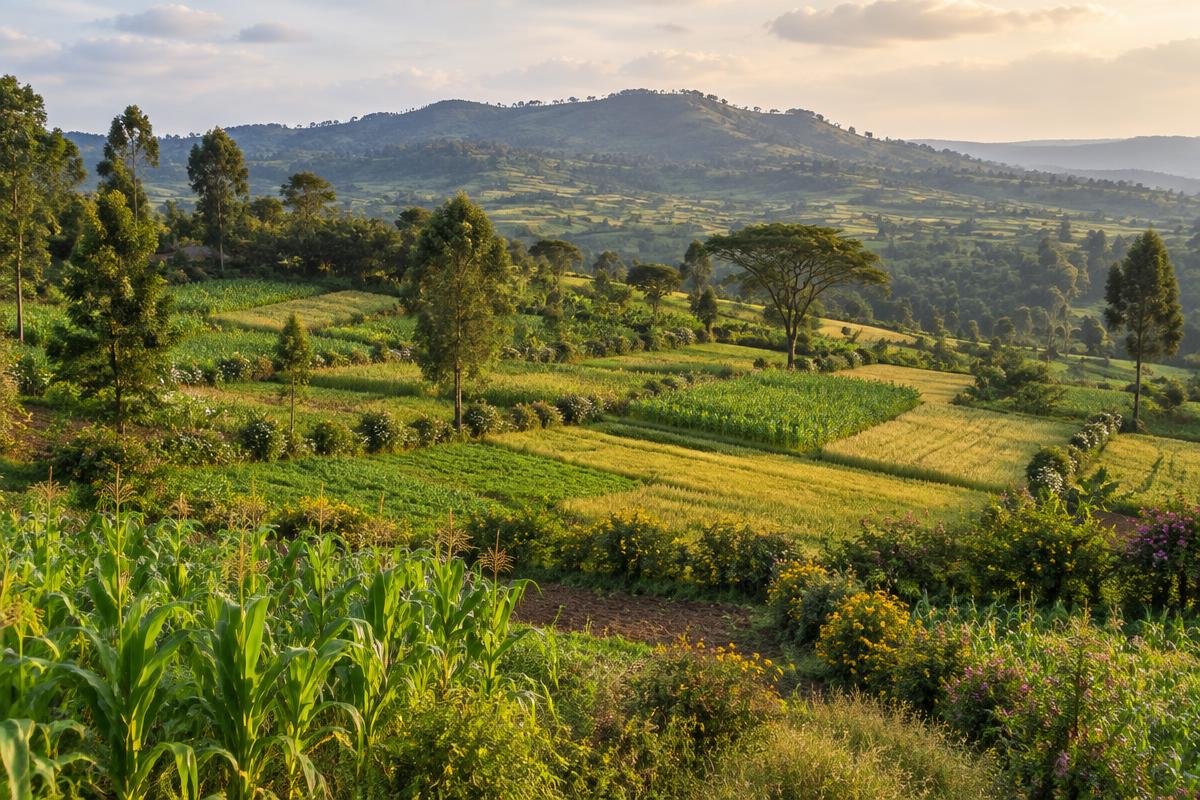
The landscape behind the hives.
- Landscape
- Vegetation
- Trees, shrubs and herbaceous vegetation
- Coffee within the wider agricultural landscape
- Local agricultural crops
- Semi-natural vegetation patches
- Bee flora
- Local flowering trees and shrubs
- Seasonal crop and garden blooms
- Herbaceous forage across the site
- A site-specific floral inventory to be established
- Beekeeping potential
- Comparing different Sidama environments within one portfolio
- Documenting terrain, nearby water, land use and flowering periods
- Building a floral database for the project over time
Location & elevation
GPS coordinates, elevation and further site photographs are being collected as part of our field documentation programme and will be published here.
Our vision for Qorke
A landscape-first apiary.
Every apiary location will be treated as an individual ecological unit. We aim to document its geographic position, elevation, terrain, vegetation, flowering periods, bee activity and honey characteristics.
The value of a beekeeping landscape is not determined only by how much land is available — it is determined by the quality, diversity and seasonal continuity of forage.